Dry Eye Syndrome in Cats


What Is Dry Eye Syndrome in Cats?
Dry eye is the common name for Keratoconjunctivitis sicca (KCS), a medical condition caused by poor tear production that leads to inflammation of the outer layer of the eye, the cornea, and the surrounding tissues. Tears are necessary to keep the cornea moist and to remove debris from the eye. A cat’s lacrimal gland (located at the top outer edge of the eye) and third eyelid gland produce a film of tears that is a mixture of mucous, water, and oils/fats. KCS reduces the ability of these glands to produce enough tears, resulting in chronic dry eyes.
Health Tools
Not sure whether to see a vet?
Symptoms of Dry Eye Syndrome in Cats
-
Excessive blinking
-
Squinting due to pain and discomfort
-
Discharge from the eyes—usually cloudy white, yellow, or green
-
Redness of the outer layer of the eye due to inflammation of the blood vessels
-
Swelling of the conjunctiva, the tissue that lines the surface of the eye and the inner eyelids
-
Elevation of the third eyelid
-
Scarring or cloudiness of the cornea
-
Dull appearance to the eyes
-
Impaired vision or blindness (in severe cases where scarring is extensive)
Causes of Dry Eye Syndrome in Cats
The cause of chronic dry eye in cats can depend on different underlying conditions or traumatic events that may have impacted the cat’s eye. The most common causes of dry eye syndrome in cats include:
-
Viral infections, such as the feline herpes virus
-
Immune diseases that damage the tear-producing glands
-
Bacterial infections, such as chlamydia
-
Anesthesia, which may temporarily reduce tear function
-
Medications
-
A disorder of the central nervous system caused by head trauma, brain tumor, or inner ear disease (rare in cats)
-
Surgeries where the third eyelid is removed or damaged
-
A direct radiation beam hitting the eye during radiographs or radiation therapy
How Veterinarians Diagnose Dry Eye Syndrome in Cats
The vet will perform a physical examination of your cat, including a thorough eye exam. During the appointment, it’s important to share any history of symptoms as well as incidents that might have led to dry eye.
In its early stages, dry eye syndrome in cats can be hard to diagnose from a physical examination alone. It may resemble other problems, like conjunctivitis or inflammation of the tissues of the eye. In early stages of a diagnosis it’s very common for the condition to be treated with these conditions in mind.
However, if symptoms persist and decreased nasal secretions are also noted, the vet will measure tear production with a procedure called the Schirmer Tear Test (STT). This test involves putting a strip of special paper inside the cat’s lower eyelid and then noting how much fluid the paper absorbs.
A culture of the tear film may be performed to investigate any bacterial overgrowth on the outer layer of the eye, as secondary infections are common in severe cases of dry eye. Fluorescein stain, or corneal staining, is often performed to identify any ulceration of the cornea. It’s performed with a special ophthalmic instrument and blue light in a dark room.
Additional diagnostic tests or procedures that may be performed include:
-
Intraocular pressure test to determine whether glaucoma is present
-
Tear duct examination
-
Flushing to ensure normal tear drainage through the nostrils
Treatment for Dry Eye Syndrome in Cats
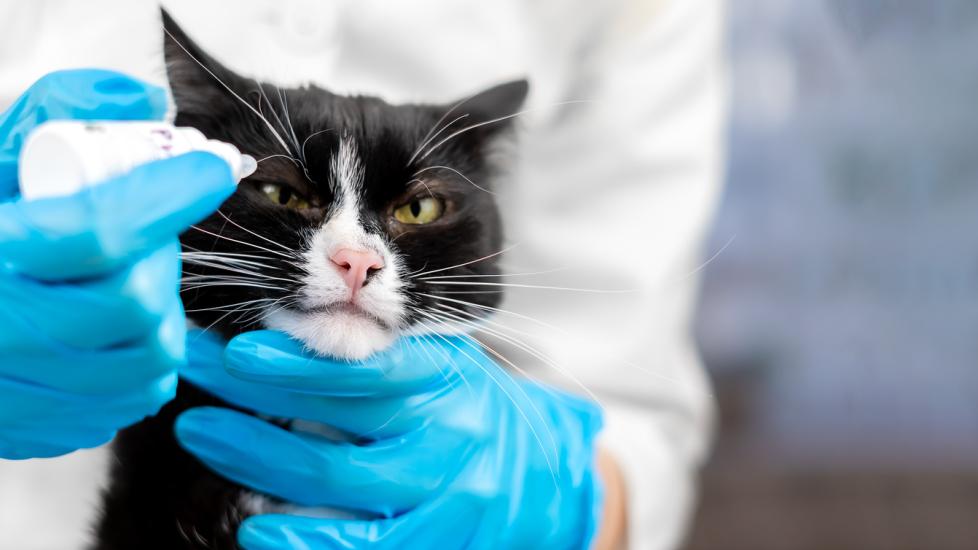
The goal of treatment for dry eye syndrome in cats is to stimulate tear production and replace the tear film that protects the cornea from damage. There are 3 commonly used medications to assist with treatment:
-
Cyclosporine (brand name Optimmune®), a drug used to prevent organ-transplant rejections in humans, is also used to treat certain immune diseases in cats. When applied as an eye drop or ointment, it suppresses immune destruction, and tear production is improved. This medication is considered the primary therapy for dry eye syndrome in cats.
-
Tacrolimus is another immune-system-related medication. It’s often tried in medical cases that don’t respond to or respond poorly to cyclosporine.
-
Pilocarpine, a drug that works on the nervous system, can be useful in treating cases of nervous-system-related dry eye in cats.
Other remedies your vet may suggest include:
-
Artificial tear solutions: These are often used in combination with a tear-production stimulant, such as cyclosporine or tacrolimus, to replace the tear film. Drops may be administered every 2-6 hours, depending on the severity of the condition. Artificial tear solutions can be purchased over-the-counter at most pharmacies.
-
Topical antibiotics or anti-inflammatory medications: These will be used to treat underlying infection and inflammation, if noted during physical examination and diagnostic testing.
-
Gently cleaning the eyes several times a day with a warm, wet washcloth: This can help soothe your cat and may help stimulate tear-film production.
-
Parotid duct transpositioning: This surgery, often by a board-certified veterinary ophthalmologist or a veterinarian who is skilled with this delicate procedure, reroutes ducts from the saliva-producing glands in such a way that saliva is delivered to the eyes in place of tears. There is a significant risk of complication, so the surgery should only be pursued when all other options have failed. Saliva can be irritating to the cornea, and some cats are uncomfortable after surgery and require ongoing medical therapy.
Depending on your cat’s diagnosis your veterinarian will be able to determine the best treatment option.
Management of Dry Eye Syndrome in Cats
You may be asked to return to the vet every 3-4 weeks after the onset of tear production therapy. Once tear production is improving, visits are recommended every 2-4 months until clinical signs stabilize, and about every 6 months thereafter.
Increased tear production can occur immediately after starting tear-production medications, although in some cats, it may take several weeks. Diseases of the immune system usually require lifelong treatment. Other types may be transient and require treatment only until tear production returns.
The prognosis is good for most cats with dry eye syndrome. Most cats can enjoy a happy, comfortable life with appropriate monitoring and diligent therapy.
However, if the condition is diagnosed late in the course of the disease and scarring of the cornea has developed, cats may not respond well to therapy or regain their sight. Once corneal scarring has developed, there is little that can be done to reverse it.
It’s critical to follow your vet’s treatment plan to increase the likelihood of a successful outcome for your cat.
Dry Eye Syndrome in Cats FAQs
Are some cats more likely to get dry eye than others?
There is no breed of cat that has been proven to be more susceptible to dry eye syndrome. However, Burmese cats are more prone to prolapsed third eyelids (cherry eye), and if inappropriate surgical correction is performed, dry eye syndrome can develop.
Is dry eye in cats curable?
It’s not curable in most cases, but the condition is treatable. Lifelong therapy may be required.
Are cats with dry eye syndrome in pain?
Cats do not seem to need as much tear film as dogs do to be comfortable during blinking. However, with more chronic and severe cases, this condition can be very painful. This becomes obvious when cats are squinting, blinking excessively, or rubbing their eyes.
Can I use over-the-counter eye drops on my cat?
Over-the-counter artificial tear solutions are a good option to keep your cat’s eyes lubricated, but these will not stimulate tear production. It’s important to discuss any over-the-counter medications with your veterinarian first before administering to your cat.
Featured Image: iStock.com/Olga Ihnatsyeva