Amyloidosis in Cats


Summary
Amyloidosis in cats is a condition in which a protein called amyloid is deposited in various tissues and organs throughout the body. This buildup of proteins can lead to organ dysfunction and illness in your cat.
Although this condition is uncommon in most cats, it does occur more often in certain breeds, including:
Amyloid can be deposited throughout the body, or it can be localized in a specific area or organ system. This abnormally folded protein inserts itself into these areas, displacing normal cells.
Amyloidosis can be deadly if enough of the protein is deposited into important organs, such as the kidneys, liver, or heart. This condition can develop in cats of any age, but it predominantly affects cats who are 7 years old or older.
Another form of amyloidosis, known as senile systemic amyloidosis, occurs in older cats and is often characterized by small deposits that have little to no effect on a cat’s health. This form is often seen as an incidental finding during a necropsy on cats who have died from other conditions.
Symptoms
Signs of amyloidosis in cats vary depending on the area(s) of the body affected. The most common organs involved in amyloidosis in cats are the kidneys, which can cause:
-
Changes in appetite
-
Dull hair coat
-
Depression and weakness
-
Fluid accumulation under the skin, in the abdomen, and/or in the chest
-
Severe kidney disease, resulting in:
-
Mouth ulcers
-
Development of blood clots (which can lead to breathing difficulties, weakness, and an inability to use the hind legs)
-
Cats with amyloidosis of the liver may also exhibit yellowing of the skin and eyes (jaundice) and internal bleeding, which can be evident as a distended abdomen, pale gums, rapid breathing, or collapse.
Causes
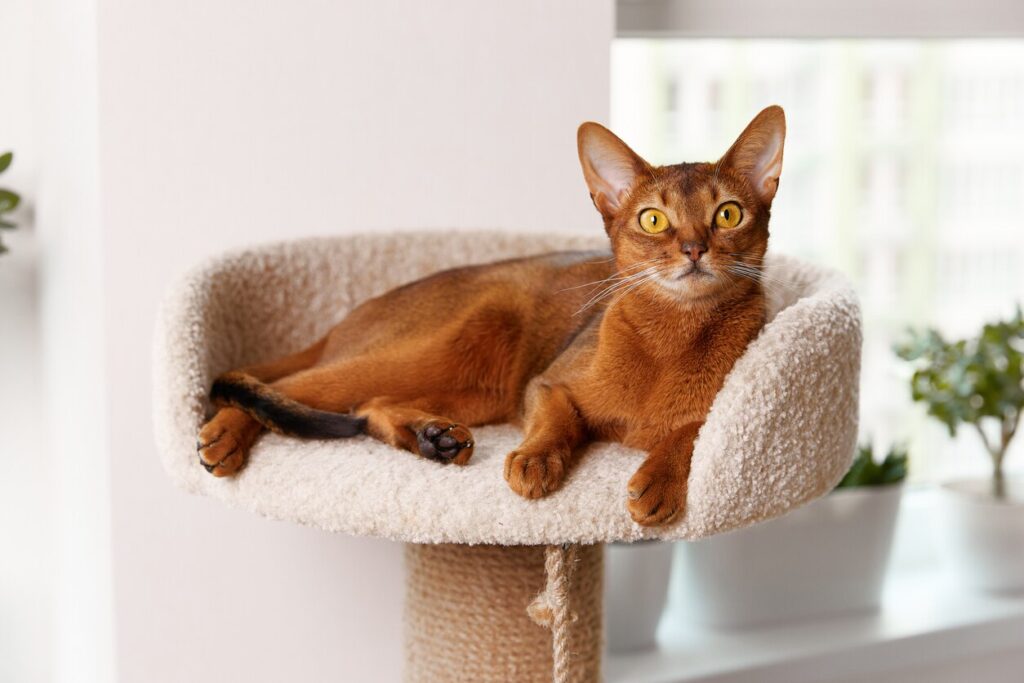
The exact cause of amyloidosis in cats is unknown. Some cat breeds are genetically predisposed to amyloidosis, such as Abyssinians, who have an abnormal gene that causes excessive amyloid to be produced. Amyloidosis can also be caused by an infection, cancer, or other immune-mediated or inflammatory conditions.
There are different types of amyloid proteins, including:
-
AA amyloid is often a result of a long-term inflammatory condition, a chronic bacterial infection, or cancer. AA amyloid often deposits in organs such as the spleen or kidneys, leading to kidney failure. While this type of genetic renal (kidney) amyloidosis is not common in cats in general, it’s often seen in Abyssinian cats.
-
AL amyloid is another form of protein deposit and is often linked with cancer. This type affects the joints or nerve tissue, such as plasma cell tumors or myelomas.
Diagnosis
If your cat is not feeling well, your vet will run a variety of diagnostic tests depending on what they suspect the underlying cause to be. Urine testing and blood work, including a complete blood count (CBC) and a biochemistry panel, will help determine if there is any organ dysfunction.
Your veterinarian will likely recommend an abdominal ultrasound, which can look at the architecture of the organs to determine if there is an abnormality in their structure. This ultrasound can also help your vet in performing biopsies of anything abnormal within the belly.
Amyloidosis is difficult to diagnose. If your cat has chronic kidney or liver failure or other forms of chronic infection or inflammation, your vet might suspect amyloidosis. Once a cat starts to show clinical signs of amyloidosis, the disease is often already in its later stages and can be fatal. Thus, most cases of amyloidosis are diagnosed through necropsy.
A biopsy of affected organs will show amyloid protein deposits, which is the only way to get a definitive diagnosis. A biopsy can be performed both before and after death.
Treatment
There is no specific treatment for amyloidosis to remove the protein deposits or stop them from accumulating. Rather, treatment is aimed at decreasing the production of any more amyloid by controlling the underlying condition and treating the clinical signs.
Any underlying medical condition such as cancer, infection, or inflammation should be treated if possible. If your cat has kidney or liver failure, hospitalization with IV fluids for at least 72 hours is recommended for diuresis (increasing urine production). Antibiotics might also be given if there is evidence of a urinary tract infection or kidney infection. Also, kidney disease caused by amyloidosis can cause high blood pressure, which needs to be treated as well.
Recovery and Management
Once your cat is stabilized with medical intervention by your veterinarian, outpatient management will focus on keeping the cat’s organs as healthy as possible.
With kidney disease, a special low-protein diet is helpful, along with any necessary medications to correct electrolyte abnormalities and promote kidney health. Cats with liver disease are often maintained on a special diet and antioxidant medications.
Amyloidosis is a potentially fatal disease. If the kidneys are involved, most cats survive less than a year. Cats who are less affected may not develop kidney failure for some time, if at all, and therefore may have a normal life expectancy.
Amyloidosis in Cats FAQs
At what age do cats get amyloidosis?
Most cats affected by amyloidosis are at least 7 years old, but it can occur at any age. In genetically linked amyloidosis in Abyssinian and Siamese cats, the average age of onset is much younger: less than 5 years of age and as early as 1 year old. There is currently no genetic test for this condition.
Which breeds of cat get amyloidosis?
Although rare in general, Abyssinian and Siamese cats commonly develop kidney amyloidosis. Oriental Shorthairs, Siamese, and Devon Rex cats are predisposed to liver amyloidosis.
Featured Image: iStock/Dariia Chernenko
References
Tizard, I. Amyloidosis in Cats. Merck Veterinary Manual. October 2022.
Longeri, M. Amyloidosis. Feline Genetics and Comparative Medicine Laboratory, University of Missouri College of Veterinary Medicine.